


User research is only valuable if the insights it generates are accessible to the people who need them. Most stakeholders don't have time to watch a recording or read through a full transcript — well-structured research notes are the primary way research actually gets consumed and retained within an organization. But thorough documentation is time-intensive work that often gets shortchanged. By designing a repeatable AI-assisted synthesis process, I reduced documentation time from half a day to 45 minutes per interview, conducted 25 interviews in two months, and produced notes that were structured, searchable, and shareable — keeping research insights alive and accessible long after the interview ends.

Conducting user interviews is standard practice, but the work doesn't end when the recording stops. Research is a design function, and the insights it generates should be accessible to the entire organization — not locked in a recording nobody watches or a transcript nobody reads. Synthesizing raw transcripts into structured, shareable notes is the work that makes research stick. But it's time-intensive, and without a repeatable process, it's the first thing that gets cut.
Well-documented research notes deliver value beyond the interviewer:
• Research insights are accessible to the full organization without requiring source material
• Knowledge is retained over time, even as teams and projects change
• Stakeholders can quickly reference specific feedback during design and product decisions
• A consistent note structure makes research comparable across studies and over time
• More interviews can be conducted without sacrificing documentation quality
Thorough interview documentation by hand was taking half a day per session or longer— a significant time investment for a designer carrying a full workload that included delivery, strategy, and stakeholder management. At that rate, conducting research at scale wasn't realistic.
Most organizations aren't interested in investing in expensive research repository tools, and even when those tools exist, adoption is inconsistent. Without a lightweight, repeatable process that fit into an existing workflow, research notes were either incomplete, inconsistent, or never written at all — leaving valuable insights trapped in recordings and transcripts that the broader organization would never access.
The goal was a lightweight, repeatable process that could produce structured, consistent research notes from any interview transcript — without expensive tooling and without sacrificing the interviewer's judgment.
The result is a process that can be completed in 45 minutes and produces notes that are structured, scannable, and ready to share — in whatever format the organization already uses, whether that's a Miro board, a Confluence page, a shared doc, or a project management tool. Every interview becomes a lasting organizational asset rather than a recording nobody will watch.
A transcript is essentially the source record for a research session. Transcripts are generated from recorded sessions using auto-transcription tools, capturing exactly what was said rather than what the interviewer remembered or chose to write down.
That completeness is what makes the transcript essential to this process. The AI prompt works exclusively from the transcript, so the quality and accuracy of the notes depends entirely on having a full, reliable record to work from. The transcript isn't just the starting point - it's the data source.
Inspired by Teresa Torres's interview snapshot framework from Continuous Discovery Habits, I developed a documentation structure that captures the most important elements of each interview in a format the broader organization can actually use: an executive summary, key insights, direct feedback, and memorable quotes. The structure is consistent enough to make research comparable across interviews, but flexible enough to adapt to what each organization needs to know.
The final document is created by the designer, not the AI, and delivered in whatever format the team already uses.
I'd like your help creating structured interview notes from a user research transcript. Work only from the transcript — do not infer or add outside context.
Participant context: [Name, role, company/team, and the topic or product being discussed]
Structure the notes in these four sections, in order:
Executive Overview — A 2–4 paragraph narrative summary covering: who the participant is and their relevant context, what was covered in the session, and their overall disposition and most valuable contributions.
Insights — Patterns, conclusions, or notable observations drawn from what the participant said. Each insight should have a bolded headline followed by 1–3 sentences of explanation. Aim for depth over quantity.
Feedback — Specific reactions, opinions, or suggestions the participant gave. Organize into sub-sections that fit the nature of the research — use your judgment based on the transcript. If no clear groupings emerge, a flat bulleted list is fine.
Quotes — 5–8 verbatim quotes from the interviewee that are especially compelling, representative, or quotable. Include a brief attribution line after each if the quote benefits from context.
Work one section at a time and wait for my confirmation before proceeding. I'll compile the final document myself.
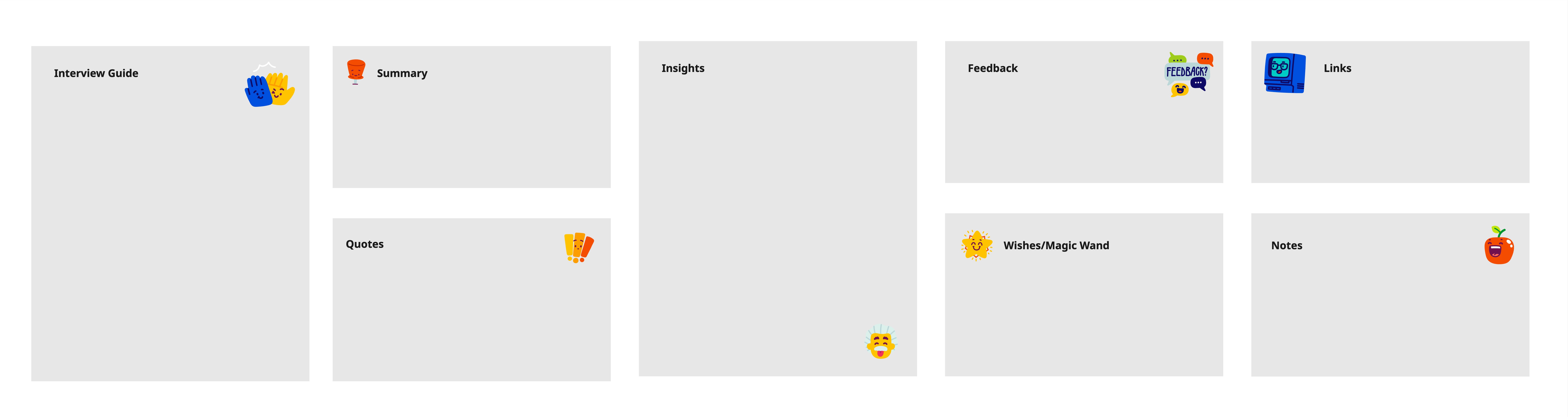
The resulting notes are organized into a consistent template — Interview Guide, Summary, Insights, Feedback, Quotes, Wishes/Magic Wand, Links, and Notes. The Wishes/Magic Wand section is a deliberate addition beyond the prompt structure: it captures what users wish existed, which is distinct from feedback on what currently does. That distinction matters for identifying unmet needs versus improving existing ones.
